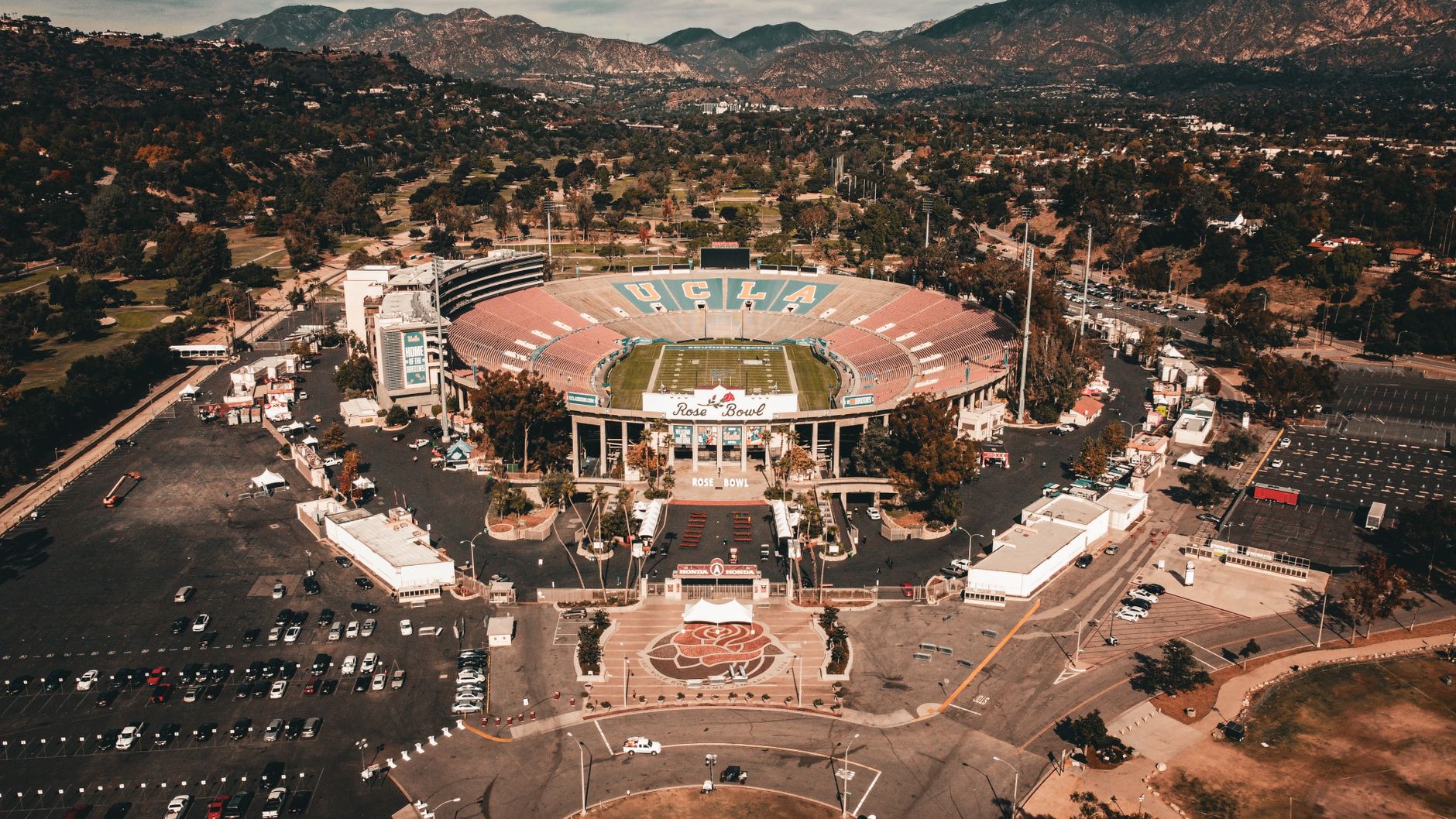
Thirty years on, the argument still lands with force: the United States outplayed England at the 1994 World Cup, and the seismic crowds that packed the Rose Bowl that summer didn't just prove a point — they set in motion a chain of events that would eventually deliver Lionel Messi to American shores.
That is the case British broadcaster talkSPORT made recently, revisiting the tournament that most American soccer observers already regard as the sport's domestic big bang. The Rose Bowl in Pasadena drew 93,000 fans per match, figures that stunned a global soccer establishment that had long dismissed the United States as fertile ground for the sport. What those crowds demonstrated, undeniably, was appetite — raw, enormous and ready to be organized into something permanent.
The USA's performance against England in the group stage remains one of the foundational moments in the national team's competitive history. The Americans didn't just survive; by talkSPORT's accounting, they were the better side on the day. For a program that had spent decades on the outside of the global game's conversation, that assertion carries real weight, even now.
The throughline to Messi is not accidental or decorative. Major League Soccer launched in 1996 directly as a condition of the United States hosting the 1994 tournament. The league survived its shaky early years, expanded relentlessly, and built infrastructure — stadiums, academies, broadcast deals, expansion franchises — that made it a credible destination for the world's best player when he signed with Inter Miami in 2023. Without the Rose Bowl crowds, without the proof of concept that 1994 provided, that infrastructure almost certainly doesn't exist.
Messi's arrival in MLS has done what skeptics said was impossible: elevated the league's commercial profile internationally and forced serious reassessment of American soccer's place in the global hierarchy. Attendance records have shattered. Inter Miami's matches sell out in minutes. The argument that MLS is a retirement league has become considerably harder to sustain when its marquee player is still, by wide consensus, the greatest of all time.
What talkSPORT's retrospective captures, perhaps inadvertently, is how much the 1994 World Cup rewired the sport's geography. The United States co-hosting the 2026 World Cup with Canada and Mexico now looks less like an accident of politics and more like the next logical chapter in a story that began with 93,000 people deciding, loudly, that they cared.
American soccer didn't become credible the moment Messi signed his contract in Fort Lauderdale. It became credible the moment a crowd that size showed up at the Rose Bowl and refused to be ignored.